CogniAgent · platform redesign
Led the first rebuild of the marketing site: a full redesign, a move from legacy page structures to Gutenberg blocks, and a faster, more reliable publishing workflow.
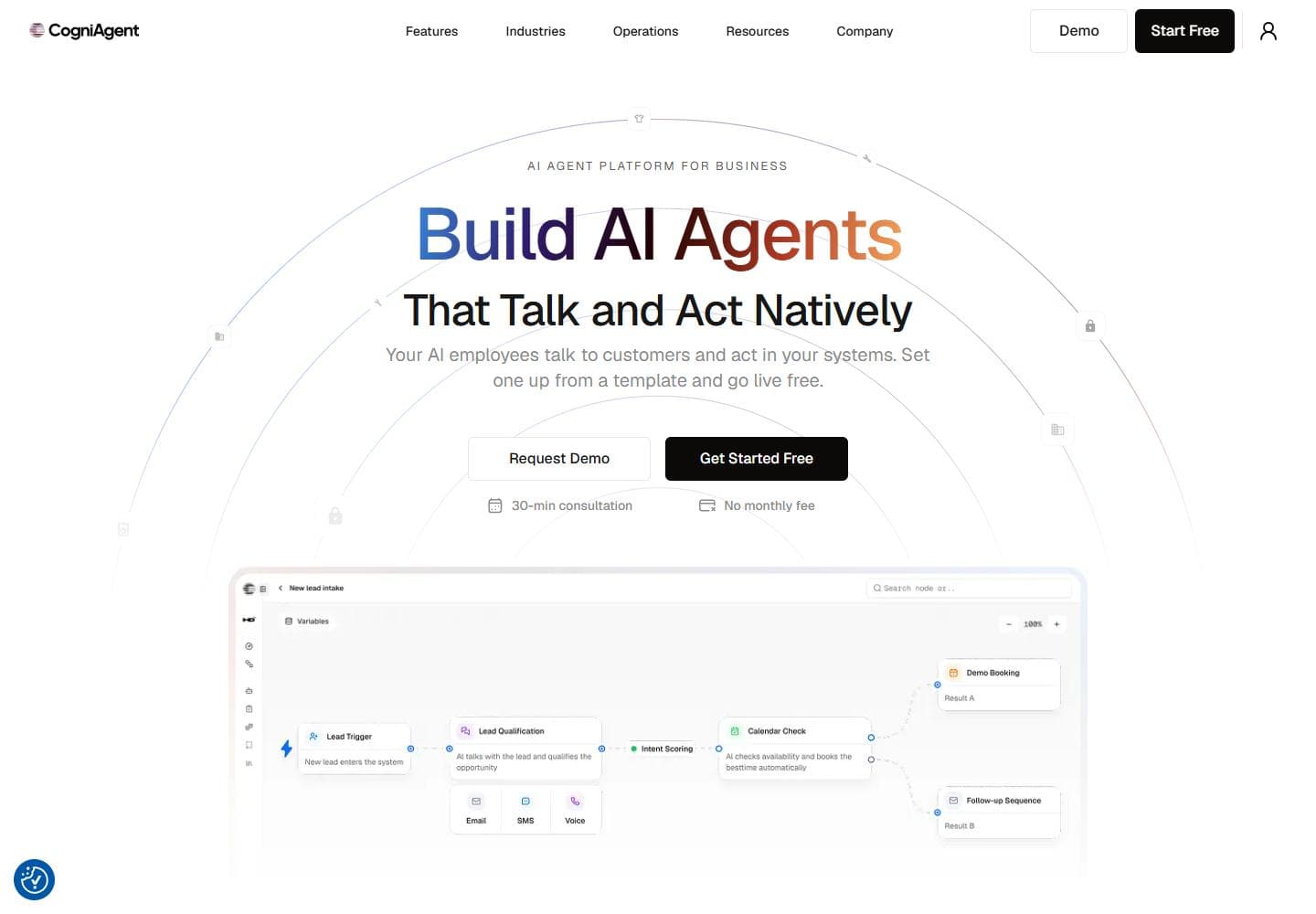 CogniAgent / Current public site
The redesign became an editable system for future pages, with performance, QA and SEO included in delivery.
The brief
The first CogniAgent rebuild had to change both the public experience and the way pages were made. The existing site relied on legacy page structures that were hard to reuse. I led the redesign and replaced that approach with an editor-facing block system.
The block architecture
I built the reusable Gutenberg components and page patterns around the site's actual marketing needs. Instead of treating each landing page as a one-off template, the system gave editors a consistent set of sections to compose and update. The repository includes dedicated content, layout and feature blocks as well as page patterns.
- Define the content structure and reusable sections for marketing pages.
- Implement responsive frontend behavior and selected motion.
- Make the editing experience predictable for future pages.
Delivery and quality
I worked across the theme, frontend, performance and testing rather than handing off the technical foundation after design. I also handled SEO implementation and discussed technical requirements with SEO specialists while the redesign was being delivered.
What it enabled
The result was a maintainable publishing foundation for the first redesign and a clearer path to consistent new pages. This is a separate phase from the later Payload migration. The images here show the current public site, not an archive of the earlier Gutenberg release.
From legacy pages to an editor-owned system
- 01Legacy page structures
- 02Reusable Gutenberg blocks
- 03Consistent page assembly
- 04Performance, QA & SEO
A closer look